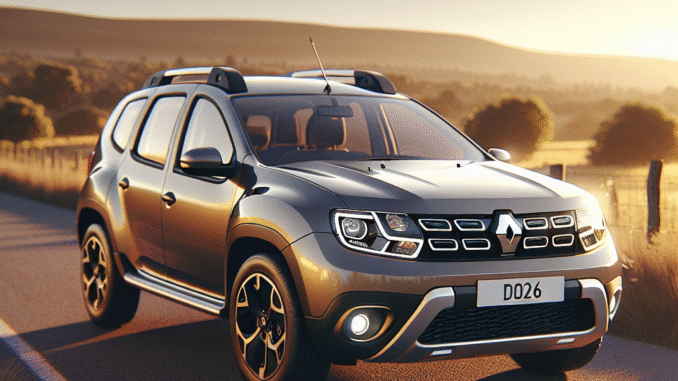
The Renault Duster is back. After a brief intermission (read: discontinuation in 2022), Renault has thrust the third‑generation Duster back into the midsize SUV ring — the very ring it helped invent back in 2012. This rebooted Duster aims to charm budget‑minded families, weekend escape artists and anyone who appreciates big boots, chunky wheels and the comforting physics of 212mm of ground clearance. In essence: it’s for those who want a bit more space and attitude than a compact crossover, without selling a kidney for a fully loaded Korean badge.
Key Features
Dimensions & Cargo — The Boot That Keeps On Giving
At 4,343 mm long, 1,813 mm wide and 1,659 mm tall with a 2,657 mm wheelbase, the new Duster sits neatly in the middle of the midsize SUV pack. It’s neither the bulkiest nor the most discreet — a sensible compromise. The headline number here is the boot: 518 litres up to the parcel shelf, the largest in its class by that common measuring standard. Practical scenarios: pack four adults and suitcases for a long weekend, or use that cavernous boot for a home renovation run — it’ll gobble up flat‑packed furniture like a small vacuum.
Powertrains — The Muscles and the Mild Conscience
Renault offers a trio of engines, with the headline being the 1.3‑litre turbo‑petrol producing 163 hp — the most powerful turbo‑petrol in this segment. There’s also a 1.0‑litre turbo option for the thrifty urbanist. And because balance is underrated, Renault serves a strong‑hybrid variant that, by the numbers, is the segment’s most powerful hybrid option (around 160 hp, depending on spec) — that’s roughly 21 hp and 31 Nm more than the comparable hybrid setups from Maruti Suzuki and Toyota. Notably, Renault does not offer a diesel option — so if you enjoy diesel torque, towing caravans or endlessly shaving fuel costs with high highway mileage, glance elsewhere.
Ground Clearance, Wheels & Ride Height
With 212 mm of ground clearance (second only to the Honda Elevate at 220 mm), the Duster preserves its off‑road-ish heritage. Combine that with 18‑inch wheels and you get the visual and practical capability to tackle bad lanes, speed‑breaker fields and the odd river bed with more confidence than a low‑sitting crossover. Caveat: 18‑inch rims plus chunky sidewalls make city potholes louder; comfort depends heavily on tire choice and suspension tuning in your selected variant.
Transmission & Drivetrain
The Duster is available with manual and automatic options across engines. It’s front‑wheel drive only — yes, the Duster that once flirted with rugged terrain in earlier avatars no longer offers AWD in this market. If you’re aspiring to actual off‑roading rather than just the look, rival models like the Victoris, Grand Vitara and Hyryder still offer AWD or CNG/alternative fuel options.
Pricing & Market Positioning
Renault has suggested a competitive price band (expected around Rs 10.5–20 lakh ex‑showroom), which places the Duster squarely against segment heavyweights like the Hyundai Creta, Kia Seltos and Maruti Suzuki Victoris. The price will matter more than any glossy brochure when buyers choose between the Duster and a Creta plus sunroof and long list of dealer incentives.
Pros and Cons
Pros
– Best‑in‑class boot space (518 litres to parcel shelf) — it’s the family‑holiday king. Perfect for parents who treat the trunk like a second living room.
– Most powerful turbo‑petrol in the segment (163 hp) — it actually moves without the theatrical gear hunting some rivals require.
– Strong hybrid option that outpowers the class rivals in combined output — greener and peppier than you might expect.
– Healthy ground clearance (212 mm) and 18‑inch wheels — practical for uneven roads and the occasional weekend dirt diversion.
– Competitive expected pricing if Renault sticks to its stated range.
Cons
– No diesel or AWD options in the current lineup — a dealbreaker for buyers who need towing, real off‑road capability or lower long‑distance running costs on diesel.
– A middle‑of‑the‑pack footprint — not the roomiest wheelbase in class (Tata Sierra leads that category), so rear‑seat legroom won’t win trophies.
– Ride comfort on urban potholes may suffer on the larger wheel variants; 18‑inch wheels look great but transmit more buzz.
– Feature parity remains to be proven: rivals often bundle panoramic roofs, 360‑degree cameras and Level‑2 ADAS — if Renault doesn’t match those kit levels, list prices will tell a different story.
User Experience
Driving the Duster is, refreshingly, unambiguous. The 1.3T engine delivers torque (280 Nm in the turbo spec) that gives the Duster a confident mid‑range shove — useful for overtaking on two‑lane highways without shouting at the gearbox. The strong hybrid smooths city traffic, cutting juddery stop‑start moments and offering a quieter, almost smug commute. The manual gearbox is precise; automatics are acceptable without being indulgent. The steering is weighty enough to feel planted on open roads, and the suspension soaks up rough surfaces better than many crossover peers.
Inside, ergonomics focus on function over drama. The cabin isn’t trying to trick you into a premium tax bracket — plastics are sensible, switchgear is purposeful and the infotainment does what infotainment should: play music and navigate. Rear seat occupants get decent headroom; legroom is adequate but not luxurious, especially when compared to the Sierra’s long wheelbase. The boot? Sublime. Move in, live there for a week, then come out smelling of pine air freshener.
Comparison with Rivals
On paper, the Duster stacks up well. It outguns many rivals on power (163 hp 1.3T) and hybrid output, and trumpets the largest boot. Against the Hyundai Creta and Kia Seltos, the Duster offers a compelling combination of power and practicality but must catch up on features like panoramic sunroofs, ADAS kits and some interior finesse where Hyundai and Kia excel. The Tata Sierra undercuts the Duster on sheer size, wheelbase and off‑road flair — but at a higher price. The Maruti Suzuki Victoris and Toyota Hyryder still tempt buyers with CNG and AWD options for specific needs (and conservative running costs), niches where the Duster politely bows out.
Price will be the Duster’s final exam. If Renault undercuts the Creta and Seltos while offering the same essentials, they’ll get a queue. If pricing sits near the Tata Sierra, then the Duster must fight on character and practicality rather than price alone.
Who Should Buy This
Buy the Duster if you want big boot space, honest engine performance and a vehicle that doesn’t pretend to be a premium SUV. It’s ideal for:
- Families who prioritize luggage space and occasional highway driving.
- Countryside commuters who value ground clearance and rugged looks.
- Buyers who want a peppy turbo engine or a stronger hybrid without paying top‑tier Kia/Hyundai premiums.
Don’t buy the Duster if you need diesel efficiency, AWD for mountains or a car packed with showy creature comforts like panoramic sunroofs and Level‑2 ADAS as standard.
Value for Money
Renault’s expected price band (roughly Rs 10.5–20 lakh ex‑showroom) is sensible and could make the Duster excellent value — provided the trim‑to‑feature mapping is reasonable. The Duster’s strengths (boot size, power and ground clearance) solve real, day‑to‑day problems. But rivals like the Creta and Seltos can bundle gadgets and perceived refinement that sway urban buyers. The Duster’s arithmetic is simple: if Renault undercuts rivals while offering the essentials, it’s a bargain; if it asks you to pay Creta‑levels for a no‑AWD, no‑diesel Duster, the equation becomes less flattering.
Practical scenarios: for an interstate family road trip, the Duster’s boot and engine performance are brilliant value; for an urban buyer obsessed with a panoramic sunroof and parking sensors all around, a Creta/Seltos pack might feel better spent.
All things considered, the Duster is a sensible re‑entry — muscular where it counts, modest where it should be. Renault’s big gamble isn’t engineering; it’s pricing and equipment strategy. If they get that right, the Duster will be a very persuasive choice in a crowded segment. If they don’t, it will still be a competent, likeable SUV that lost a few battles to better‑dressed competitors.
My honest recommendation: if you want practical, honest capability with a large boot and potent petrol or hybrid options — and you don’t need diesel or AWD — wait for Renault’s official prices and buy the Duster only if it undercuts or matches the Creta/Seltos on the equipment list for the money. If it does, it’s worth a long look; if it doesn’t, admire the boot from afar and keep shopping.
Leave a Reply