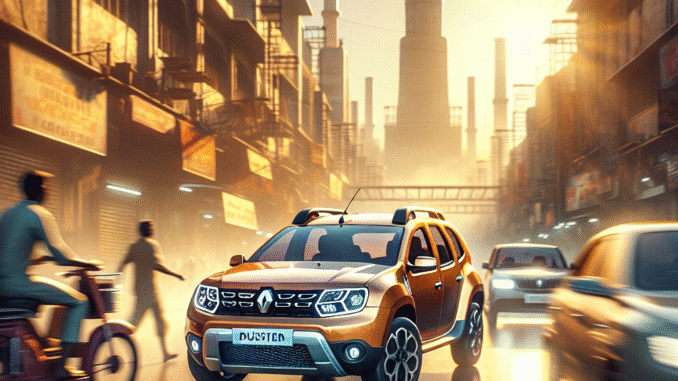
Renault has decided that patience is overrated and that the best way to fix a shrinking market share is to launch a new car every year. Bold move, if you believe sheer momentum can outpace strategy. For those who missed Renault’s earlier fanfare in India: the brand once enjoyed cult-like status with the Duster in 2012 and the Kwid in 2015, only to lose its grip on the market as rivals doubled down on volume, product breadth and dealer heft. Now the company wants a fundamental reset — faster development cycles, yearly model drops and a target market share that reads somewhere between optimistic and audacious: 3–5 percent by 2030.
Key Features of Renault’s New India Strategy
Annual Product Cadence
Renault’s headline move is simple to describe and devilishly hard to execute: release a new model every year. The logic is obvious — stay relevant, keep showroom floors fresh, chase trends before they cool. Practically speaking, this means compressing design, validation and launch cycles that used to take two years into a yearly rhythm. If you enjoy manifests about speed and agility, you’ll love a brand that turns car development into a quasi-fashion calendar.
Focus on Renewals and Segment Presence
After the Duster and Kwid put Renault on a pedestal, the company lost footholds in crucial segments like the mid-size SUV and premium compact SUV, where the Hyundai Creta and Kia Seltos have feasted. The renewed push emphasizes filling those gaps — product renewals and segment entries — not merely cosmetic facelifts. The Duster’s recent reappearance is positioned as the first tangible step in that direction, essentially a proof-of-intent rather than a full-blown comeback.
Speed Over Slack: A Cultural Shift
According to the brand CEO and chief growth officer, Fabrice Cambolive, the lesson India taught Renault was fast and unforgiving: speed. The company isn’t just promising more cars; it’s promising a faster internal tempo — quicker design decisions, faster validation and arguably an expectation of faster consumer feedback loops. Translation: fewer drawn-out strategic debates and more ‘ship and iterate’ mentality.
Ambitious Market-Share Target
Numbers are nice. Renault’s target of reaching a 3–5 percent market share by 2030 is a metric-driven promise intended to gauge success beyond PR-friendly adjectives. To put that in perspective, Renault peaked at about 4 percent market share in FY17 after selling 1,35,123 units. Fast forward to FY25 and volumes had dwindled to roughly 37,900 units — under 1 percent. The target is therefore both a reclamation and an upgrade: don’t just survive, regain a meaningful footprint.
Pros and Cons
Pros
- Renewed focus on product launches means consumers get fresh choices instead of decade-old designs rebadged as ‘new’.
- The Duster’s comeback reminds buyers Renault still knows how to build a rugged, value-packed SUV — great for buyers who liked the original Duster’s mix of usability and affordability.
- An annual cadence could push the brand to localize faster, improving cost structure and pricing — essential in price-sensitive markets like India.
- Clear targets (3–5 percent) provide measurable accountability rather than vacuous marketing goals.
Cons
- Speedy development risks quality control. Compressing timelines increases chances of software bugs, fit-and-finish errors, or under-tested components.
- Launching a new model every year requires a deep dealer and service network to support sales — something Renault must rebuild after years of underperformance.
- Market-share ambitions will be expensive if they rely on incentives and aggressive discounts, which can depress brand value and margins.
- Annual launches run the risk of cannibalizing Renault’s own portfolio if pricing and segment positioning aren’t carefully orchestrated.
User Experience: How It Feels to Buy and Drive a Renault Today
Walking into a Renault showroom in 2026 should ideally feel like walking into a brand that’s trying hard to win you back: refreshed models, aspirational SUVs and staff that practice persuasive optimism. But the proof, as always, is in the drive. The Duster’s DNA — if retained — promises a comfortable, semi-no-nonsense SUV experience: forgiving suspension for pothole-dense urban routes, generous ground clearance for rural detours and a cabin that prioritizes practicality over pretentious minimalism.
Where you’ll feel the growing pains is in software, availability and service. A rushed launch might mean missing features that rivals offer as standard, or late availability of dealer-backed accessories and upgrades. Imagine buying a Renault with a promising infotainment system that gets a bug-fix OTA only two months after launch — small annoyance for some, dealbreaker for others.
In practical scenarios: Renault’s strategy could excel for a young family moving from a hatchback to a compact SUV who values value and durability above showroom razzle-dazzle. It will fall short for tech-savvy buyers who expect the latest ADAS, seamless connected-car features and a top-tier infotainment experience straight out of the box.
Comparison with Alternatives
If you like comparators, then Hyundai and Kia are the convenient foils. Both players have leaned heavily into rapid product refreshes and sustained marketing, coupled with massive dealer networks and strong localization. Where Renault can outshine them is in positioning: nostalgia-driven buyers who remember the original Duster or Kwid might find Renault’s value proposition compelling if the new products hit the right price-performance ratios.
However, Hyundai and Kia have shown they can iterate quickly in India without sacrificing quality or dealer reach. Maruti Suzuki remains the volume titan with unmatched service networks, and Tata Motors has carved a reputation for value-packed SUVs. For Renault to compete, annual launches aren’t enough — they must be backed by equally swift improvements in manufacturing scale, distribution and after-sales service.
Who Should Buy This
Consider buying a Renault — especially a renewed Duster or future SUVs — if you fit one of these profiles:
- You want a rugged, affordable SUV for a mix of city and weekend rural driving, and you value ride comfort and ground clearance over the latest driver-assist bells and whistles.
- You remember Renault’s past hits and want to reward a comeback attempt, provided price and warranty terms are competitive.
- You live in an area with a decent Renault service presence where spare parts and maintenance won’t feel like a treasure hunt.
Steer clear if you’re a feature-first buyer who expects top-tier infotainment, latest-gen ADAS, or the most efficient engines in class from day one. The inaugural product batches under an accelerated timeline are likely to prioritize core strengths over niche luxuries.
Value for Money
Value in India’s car market is a balancing act between purchase price, running costs, warranty, fuel efficiency and resale value. Renault’s best shot at 3–5 percent market share hinges on offering compelling pricing and robust localization to keep running costs low. If the company can deliver this without sacrificing essential quality, Renault could become the “affordable rugged SUV” play for many buyers.
Practical example: if Renault prices a refreshed Duster competitively — say, a few percentage points below mid-tier Creta/Seltos pricing while offering similar practicality — it gains steam among value-conscious SUV buyers. But if the price creeps up to match the competition without matching feature sets or dealer reach, buyers will prefer the established players for resale confidence and service convenience.
Another economics point: frequent launches can be expensive. If Renault funds this push through deep discounts and heavy advertising without scaling manufacturing efficiency, it risks eroding margins. The smart play is to raise pace but also ensure localization and supply chain robustness to protect price integrity.
There’s also the intangible currency of trust. One or two well-priced, well-supported launches will earn goodwill; a string of half-baked releases will not.
Renault’s strategy in India is equal parts ambition and admission: ambition because the company is speeding up launches to claw back relevance; admission because the brand recognizes past complacency cost market share. The Duster’s return is promising, but a single model cannot do the heavy lifting of rebuilding network strength, dealer confidence and modern product competitiveness. Annual launches will keep Renault in conversation, but to win hearts and wallets it must pair speed with stubborn attention to quality, pricing discipline and service expansion. If you like the idea of a feisty, value-first SUV maker making noise again, watch the next 12 months with cautious optimism — there’s potential, but also plenty of ways to trip over your own urgency.
Leave a Reply